2018年11月2日星期五

Microwave drying characteristics and effects on quality of Litchi chinensis


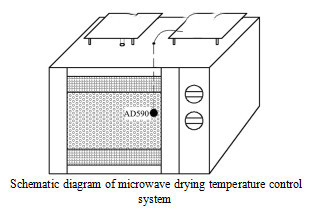
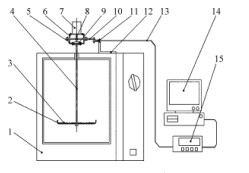
Absrtact: In view of the problems existing in Litchi hot air drying, the effects of microwave drying characteristics and drying conditions on the quality and energy consumption of litchi after drying were studied by using self-made microwave drying equipment test system and intermittent drying process. 
The results showed that microwave drying of litchi was mainly in a constant speed stage, and the drying speed depended on different batch ratios; the temperature change could be divided into two stages: rising and stabilizing; the microwave batch time had a significant effect on the quality of litchi after drying, and the drying energy consumption was affected by the batch ratio, but the main influencing factor was heating time. 
Key words: Litchi chinensis; microwave drying; drying characteristics; quality Litchi is a special fruit in South China. It ripens in high temperature and humidity season. It has high water content and sugar content. It is easy to rot and deteriorate. It is very resistant to storage and transportation. With the rapid development of litchi production, the contradiction between production and marketing has become increasingly prominent, and dried litchi can reduce the losses caused by mildew after harvesting fresh fruit and increase product value.

Characteristics and influencing factors of microwave drying


In the early stage of drying, the moisture content of materials is high, the ability of absorbing microwave energy is strong, the temperature rises rapidly, and the material temperature tends to be stable, so most of the water loss process of wheat is in the stage of constant-speed drying. In hot air drying and other radiation heating drying, the whole drying process can be divided into accelerated drying stage, constant drying stage and decelerated drying stage. Most of the water loss process of wheat is in a very slow deceleration stage.
This is because microwave has longer wavelength and better penetration than other electromagnetic waves used for radiation heating, such as infrared radiation. It can penetrate most non-metallic materials to a considerable depth. The drying materials are heated in the same table. The temperature gradient and humidity gradient in the materials are also consistent. The water migration speed in the materials is also consistent with the surface water. The evaporation rate kept constant for a long time.
1) The effect of microwave drying equipment on wheat quality is significant. The germination rate of wheat grain is sensitive to drying temperature and can be used as an index of wheat thermal damage. SDS sedimentation value is sensitive to drying power response and can show the trend of quality change. It can be used as an indicator of wheat quality change.

Microwave drying characteristics of wheat and its effect on quality


ABSTRACT: Aiming at the problems existing in wheat hot air drying, the microwave drying characteristics of wheat and its influence on quality and energy consumption after drying were studied by using microwave test equipment through choosing different drying power, material laying thickness and dehumidification air speed. The results showed that the microwave drying of wheat was mainly in the constant speed stage. Microwave drying had a significant effect on wheat quality. The germination rate and SD S sedimentation value of wheat grains were sensitive to microwave treatment. It could be used as the index of heat damage and quality change of wheat. The energy consumption of microwave drying of Wheat was the main factor. Affected by humidity.
Key words: wheat grain; 
drying characteristics; quality
Quote
Wheat is one of the main grain crops in China. Because of weather, the moisture content is high during harvest. If it can not be dried in time, it will deteriorate and mildew, which seriously affects the yield and quality of wheat and greatly reduces the economic benefits. However, the traditional hot air drying has many problems, such as long drying time, high energy consumption and poor drying quality. Microwave drying is different from hot air drying and other drying methods. Because of its unique heating characteristics, material drying speed, short time, high quality and heat utilization after drying, it has been paid more and more attention and applied in the fields of medicine, food industry, chemical industry, tobacco and agricultural products processing.

Microwave drying characteristics of corn and its effect on quality

【Abstract】 In view of the problems of hot air drying in corn, the self-made microwave drying test system was used to study the microwave drying characteristics and drying conditions of dried microwave power and energy consumption after using different drying power, heating time and supporting process. The influence of unit mass power consumption, temperature, average water loss rate on corn kernel germination rate, crack rate and starch yield during microwave drying of corn was analyzed, and the process parameters affecting microwave drying corn and corn microwave drying equipment were determined. The optimal process flow.
The results show that the microwave drying of corn is mainly in the constant-speed drying stage. The application of microwave technology can not only dry the corn grain quickly and economically, but also maintain its seed value and improve its quality.
Keywords: microwave drying corn drying characteristics quality
introduction
Due to the weather, the moisture content of corn is high when harvested. If it cannot be dried in time, it will cause deterioration and mildew, which will seriously affect the yield and quality of corn. The traditional hot air drying method, when the material is heated before drying, the drying effect is poor and the drying quality is poor, especially the corn kernel is large, the unit specific area is small, the grain cortex structure is tight and smooth, and the water is not easily transferred from the inside to the outside of the grain.

Study on microwave drying rule and parameter optimization of fruits and vegetables

The research on microwave drying of fruits and vegetables mainly focuses on the effects of microwave power, time, power to mass ratio, slice thickness and other parameters on the product color, expansion rate, rehydration, micro-structure, power consumption, vitamin C content, starch content and other indicators.
The spinach with 50 g moisture of 9.01 (g moisture/g dry material) was reduced to 0.1 (g moisture/g dry material) by microwave drying equipment. It was found that the energy consumption remained constant when the microwave power was between 350 and 1 000 W, but increased significantly when the microwave power was between 160 W and 90 W. Dry 350 s under power, the product has the best quality and the lowest energy consumption (only 0.12 kW h).
Microwave drying of banana slices was studied, and the water loss characteristics of microwave drying banana slices were revealed. It was found that microwave drying of banana slices could be divided into three stages: acceleration stage, constant speed stage and deceleration stage. With the increase of microwave power, the rate of water loss is obviously increased. Higher pre-launch power and lower post-launch power are conducive to the improvement of appearance quality and quality, that is, the transmission power has a significant impact on the appearance quality. The optimum technological conditions were obtained through optimization. 

2018年11月1日星期四

Research status of microwave drying technology for fruits and vegetables at home and abroad

Comparison between microwave drying equipment and other drying equipment Compared with other drying methods, the microwave drying method of fruits and vegetables has great advantages, which mainly embodies in the maintenance of appearance, micro-structure and nutrients of fruits and vegetables. Khraisheh et al. studied the drying of potato chips by microwave and hot air convection respectively, and observed the changes of quality and texture structure of potatoes. 
 It was found that the content of vitamin C in potato chips dried by microwave was twice as high as that dried by hot air convection. There is a linear relationship between the shrinkage coefficient of potato volume and the reduction coefficient of water content. The slope of the curve between them remains unchanged during convective hot air drying. That is to say, the volume of potato chips shrinks uniformly with the decrease of water content. 

Research progress of microwave drying technology for fruits and vegetables

Abstract: This paper reviews the research on microwave drying technology of fruits and vegetables at home and abroad. It compares microwave with other drying methods, introduces the application of microwave combined with other drying methods, and expounds the characteristics and laws of microwave drying fruits and vegetables.
Key words: microwave drying equipment; fruits and vegetables
Fruits and vegetables are an indispensable part of people’s daily lives, and they provide abundant nutrients and minerals for human beings. Due to the high water content of fruits and vegetables, it is generally preserved by drying. With the improvement of living standards and the accelerated pace of life, people began to have a special liking for nutrient-rich portable fruit and vegetable chips, and the demand for it is increasing.
However, the processing methods of fruit and vegetable chips in the market mostly use the traditional frying and drying method, which not only causes the loss of nutrients of fruits and vegetables, but also produces some toxic and harmful substances such as acrylamide during processing. Therefore, it is necessary to find a method for drying fruits and vegetables that can better maintain the nutrients of fruits and vegetables and avoid toxic and harmful substances to the products