- Objective: To study the effect of different drying methods on the quality of Beiqing Longyi, and to optimize the best drying method of Beiqing Longyi.METHODS: After five drying methods (shade drying, sun drying, drying, microwave drying equipment, freeze drying) and different drying temperatures (40, 50, 60 C) under different drying methods, Beiqinglongyi was treated with drying time, rehydration rate, water content, alcohol extract content, effective components of walnut quinone and walnut ketone and their methanol extracts on human gastric adenocarcinoma BGC 823 cells and human lung cancer A54 cells. The effect of different drying methods on the quality of Beiqinglongyi was compared and analyzed.
 Result: Among the five drying methods, microwave drying time was the shortest and shade drying time was the longest; freeze-drying sample had the largest moisture content and microwave drying sample had the smallest moisture content; the content of alcohol extract had little difference; the content of walnut quinone was the highest in freeze-drying sample and the lowest in microwave drying sample; the content of walnut ketone was the highest in drying sample at 40 C and the lowest in freeze-drying sample in vitro. Tumor test showed that freeze-drying > drying at 40 C > shade-drying were the drying methods according to the growth inhibition rate of the two kinds of cells, and the inhibition rate decreased with the increase of drying temperature.
2019年1月1日星期二
Multi-index evaluation of the effect of different drying methods on the quality of Beiqing Longyi


Effect of drying methods on physicochemical properties of wet konjac flour
ABSTRACT: In this study, the effects of hot air drying, vacuum heating drying and microwave drying on the physical and chemical properties of wet konjac flour were compared and analyzed, and the related mechanism was discussed.

The results showed that three drying methods had significant effects on the physical and chemical properties of konjac flour (p < 0.05). Compared with microwave drying equipment and hot air drying, the konjac flour obtained by vacuum heating drying has white color, the highest porosity, a large number of micro-holes formed in the interior, which makes the swelling rate of konjac flour the highest and the viscosity of the sol the highest (34500 mPa. s). The swelling property of konjac flour is better than that of other two drying methods, and is more suitable for drying konjac flour.
Research status of tea drying technology
Absrtact: Drying, as an important process of tea preliminary processing, is of great significance to the formation of sensory quality of tea. During the drying process, under the action of heat and force, with the continuous loss of water, the physical characteristics and internal substance components of the processed products change dramatically, thus forming the unique sensory quality of tea.

This paper expounds the principles and characteristics of various drying technologies for primary tea production in China, points out the trend that microwave drying equipment will develop from single technology to combined application technology, and points out that the basic research of new combined drying technology and on-line detection technology of moisture content in drying products should be improved, which will provide some development ideas for the research and development of new tea drying machinery and future tea drying technology.
2018年12月28日星期五

Effects of Different Drying Technologies on Bioactive Components in Wheat Seedlings
ABSTRACT: The wheat seedlings were dried in different ways, and the effects of different drying conditions on their bioactive components were explored, and an optimum drying process was obtained. The contents of total chlorophyll, polysaccharide, flavonoids and polyphenols were determined by colorimetry.
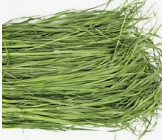
The results showed that the highest total chlorophyll content was 82.33 mg/100 g when microwave drying equipment was 560 W; the highest polysaccharide and polyphenol content was 19.87 mg/g and 5.80 mg/100 g when oven drying temperature was 90 degrees C; the highest content of flavonoids was 5.29 mg/100 g when microwave power was 420 W; conclusion: the best drying condition was oven drying temperature 90 degrees C, microwave drying. The power is 420 W.
Effects of drying methods on quality and antioxidant capacity of okra flower tea in vitro
ABSTRACT: In order to study the effects of different drying methods on the quality and in vitro antioxidant capacity of okra flower tea, the okra flower was treated by 50 ~C hot air drying, 70 ~C hot air drying, microwave drying equipment and vacuum freeze drying. The appearance quality, color, polysaccharide content, flavonoid content, antioxidant capacity and sensory quality of okra flower tea were analyzed.
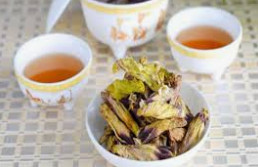
The results showed that there was no significant difference in appearance quality and antioxidant capacity between Okra tea and tea dried by 50 ~C hot air drying and 70 ~C hot air drying (P > 0.05), but there was slight difference in polysaccharide and flavonoid content. The okra tea dried by microwave drying had severe shrinkage in appearance, burnt paste in interior and exterior, but strong aroma and high antioxidant capacity in vacuum freeze-drying place. Li’s okra flower tea has symmetrical appearance and bright color. The content of polysaccharides and flavonoids in flower tea and flower tea water is the highest, and the antioxidant ability is the highest. The color of flower tea water is golden and transparent, and the flavor is pure, but the fragrance is mild. The results provide technical guidance for comprehensive utilization and processing quality control of okra tea.
订阅:
博文 (Atom)