- Abstract: the effects of freeze drying, spray drying, vacuum drying, microwave drying equipment, hot air drying and extrusion on the physical, nutritional and antioxidant properties of pickled cabbage powder were studied.
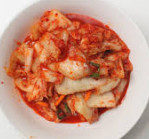 The results showed that the content of lactic acid and free amino acid in freeze-dried kimchi powder was the highest, 48.39% and 45.45% higher than that in hot air drying. The soluble dietary fiber content of kimchi powder extruded was the highest, 64.21 higher than that of hot air drying. Spray dried pickle powder has the best brewing performance, which is 32.39% higher than that of hot air dried pickle powder. Rapid drying and vacuum freeze-drying of kimchi powder have better fluidity, and its angle of repose is 25.51% smaller than that of hot air drying. 23.14%.
2019年1月27日星期日
Effect of Different Drying Methods on Quality of Pickled Vegetables

2019年1月25日星期五
Effect of Microwave Drying on Drying Characteristics and Quality Characteristics of Sea Cucumber
Abstract: In order to improve the drying time of heat pump and the poor quality of microwave drying equipment, the effects of microwave combined drying on the drying characteristics and quality characteristics of sea cucumber were studied. The different drying temperatures and water content of different switching points were proposed. The heat pump microwave combined drying method was used to study the changes of water content, drying rate, shrinkage rate, rehydration rate, appearance, histomorphology and odor of sea cucumber.

The results show that the heat pump microwave combined drying shows obvious segmentation characteristics. The maximum drying rate in the microwave drying stage is much higher than that in the heat pump drying. The segmental thin layer drying model can simulate the drying characteristics of the sea cucumber. In terms of dry product performance, the rehydration rate of the pure heat pump dried product is lower than the joint drying at the same drying temperature, but the shrinkage rate is greater than the joint drying.
Effects of Different Drying Equipment on the Content of Bioactive Components in Watermelon
Abstract: In order to study the effects of three drying processes at room temperature drying, oven drying and microwave drying equipment on the active ingredients of winter melon skin, the water loss rate of melon skin after drying by different processes was studied, and the polysaccharide in winter melon skin was detected by spectrophotometer. , flavonoids, polyphenols, chlorophyll a, chlorophyll b, total chlorophyll content; after comparison, the water loss rate of winter melon skin after microwave drying is higher than normal temperature drying and oven drying;
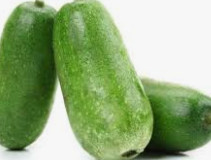
The content of polysaccharide in melon skin was the highest in oven at 60 °C, and the content of flavonoids in melon skin was the highest at room temperature. The content of polyphenols in melon skin was the highest at 105 °C in the oven, and in melon skin at room temperature and oven at 60 °C. The chlorophyll content is the highest. Among the three drying methods, the best retention effect on the active ingredients in winter melon skin was drying in an oven at 60 °C.
Study on Correlation between Dielectric Properties of Apple and Microwave Drying Moisture Content
Abstract: The coaxial probe method is suitable for measuring the dielectric properties of high-loss materials such as fruits and vegetables. The correlation between the coaxial dielectric properties of fruits and vegetables and the dry moisture content is important for monitoring the change of water content during the processing of fruit and vegetable microwave dryers. Guiding significance. To this end, apples were used as test materials, and 500 to 8 were measured using a coaxial probe and a network analyzer. Dielectric properties of apples during microwave drying equipment in the 5 GHz frequency range.

The results show that with the increase of frequency, the dielectric constant of apple samples decreases, and the dielectric loss factor decreases first and then increases. By fitting the dielectric properties to the dry water content, the frequencies of 915 MHz and 2450 MHz are established. The equation of relationship between relative dielectric constant, dielectric loss factor and water content of apple. The research results can provide a basis for online monitoring of microwave drying moisture content by using coaxial dielectric properties.
Optimization of Microwave Drying Technology for Ginkgo biloba Fruit
Absrtact: In order to explore the optimum technology of microwave drying equipment for Ginkgo biloba fruit, microwave power, heating time and intermittent time were selected as experimental factors, average drying energy consumption, mass drying rate and sensory quality score after drying were taken as evaluation indexes, quadratic orthogonal regression test was used to optimize the microwave intermittent drying technology for Ginkgo biloba fruit, and quadratic regression was established by Backward analysis method. Mathematical model and response surface analysis of regression model.

The results show that the selected experimental factors have a significant influence on the drying process, and the order of strength is heating time > microwave power > intermittent time. There is interaction between the experimental factors.
The optimum drying parameters of Ginkgo biloba fruit were microwave power 4.5 W/g, heating 6.5 s and intermittent 80 s. Under these conditions, the drying rate was 0.157 kg/(h.kg), the average energy consumption was 65.54 kJ/g, and the sensory quality score was 8.5. The experimental results have certain reference value for improving drying equipment and microwave drying of Ginkgo biloba fruit.
订阅:
博文 (Atom)