2019年1月25日星期五

Optimization of Microwave Drying Technology for Ginkgo biloba Fruit

Absrtact: In order to explore the optimum technology of microwave drying equipment for Ginkgo biloba fruit, microwave power, heating time and intermittent time were selected as experimental factors, average drying energy consumption, mass drying rate and sensory quality score after drying were taken as evaluation indexes, quadratic orthogonal regression test was used to optimize the microwave intermittent drying technology for Ginkgo biloba fruit, and quadratic regression was established by Backward analysis method. Mathematical model and response surface analysis of regression model.
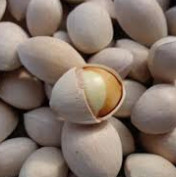
The results show that the selected experimental factors have a significant influence on the drying process, and the order of strength is heating time > microwave power > intermittent time. There is interaction between the experimental factors.
The optimum drying parameters of Ginkgo biloba fruit were microwave power 4.5 W/g, heating 6.5 s and intermittent 80 s. Under these conditions, the drying rate was 0.157 kg/(h.kg), the average energy consumption was 65.54 kJ/g, and the sensory quality score was 8.5. The experimental results have certain reference value for improving drying equipment and microwave drying of Ginkgo biloba fruit.

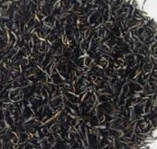
Effect of Microwave Hot Air Combined Drying Technology on the Quality of Gongfu Black Tea

The current production technology of Gongfu black tea is as follows: fresh leaves 1 rhombus withering kneading fermentation microwave drying equipment, in which drying is the process of losing most of the moisture in the initial processing of black tea. Through this process, the aroma of tea can be further developed, and the purpose of storage and transportation can be achieved.
Most of the current black tea in China is dried by hot air, which has the advantages of less investment, low energy consumption and higher aroma of tea. The disadvantage is that in the process of hot air drying, the tea temperature rises for a long time, which causes the inactivation of enzymes in time and then affects the taste of tea. At present, the microwave drying of black tea plays an increasingly important role in the processing of agricultural products.

Effects of three treatments on vitamin C content in different parts of jujube

Objective To observe the effect of different treatments on the content of vitamin C in different parts of jujube. Methods The red matter was dried by electrothermal constant temperature drying method, microwave drying equipment, electrothermal constant temperature drying method and microwave drying method. The vitamin C levels of different parts of red matter were determined by iron () - phenanthroline - BPR spectrophotometry. Results The vitamin C level in pericarp was significantly higher than that in pulp (P < 0.065).
Vitamin C level in peel decreased significantly after electrothermal constant temperature drying (P < 0.05) or microwave drying (P < 0.05). Wave drying caused more damage to vitamin C, while electrothermal constant temperature drying combined with microwave drying did less damage. Conclusion Microwave electrothermal constant temperature drying combined with microwave drying can dry things more efficiently and has less damage to vitamin C. It is worth popularizing.

Study on drying method of Shujin Tongluo extract

Objective To optimize the drying process of Shujin Tongluo extract. Methods Microwave drying equipment was used.4 drying methods, namely decompression drying, drying and spray drying, were used to dry the extract of Shu Jin Tong Luo. The yield of dry paste, the solubility of the granules, naringin and gastrodin content were determined. The moisture absorption percentage of the granules was determined, and the hygroscopic time curve was drawn to compare the hygroscopicity of the granules.
Results the relative moisture absorption rate and the equilibrium moisture content of Shu Jin Tong Luo granules from 4 drying methods were small and large in order of decompression drying, microwave drying, spray and drying. Conclusion The best drying method of Shujin Tongluo extract is decompression drying.

Microwave Drying Characteristics of Lycium barbarum and Its Effect on Quality

Absrtact: In order to shorten drying time and save drying cost of Lycium barbarum, the microwave drying characteristics of Lycium barbarum and its effect on product quality after drying were studied by using microwave test device and selecting unused drying power and material laying thickness.
The results showed that the drying period of Lycium barbarum could be greatly shortened by microwave drying equipment during the slow drying stage. The drying time of microwave combined drying was about 65 hours shorter than that of natural drying, accounting for 72% of the drying period of natural drying.
Drying power and material layer thickness are important factors affecting microwave drying time. The larger the microwave power is, the smaller the material layer thickness is, the shorter the drying time is. Different microwave drying parameters have different effects on the quality of dried products. Microwave power is 1 kW. When the material layer thickness is 2 cm, the preservation rate and sensory quality of dried polysaccharides are the best.

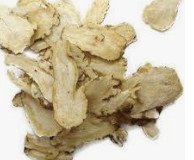
Study on Optimization of microwave drying and sterilization process of Angelica sinensis

ABSTRACT: Objective: To study the optimum technological conditions of Angelica sinensis microwave drying equipment. Methods: Single factor test and L9 (34) orthogonal test were used to screen the factors. The total number of colonies, ferulic acid content and final water content of Angelica sinensis were evaluated comprehensively.
RESULTS: The optimum microwave drying and sterilization parameters of Angelica sinensis were water content 15%, microwave power 12 kw, microwave speed 1030 r.s-1 and sample loading 10 kg.m-2. CONCLUSION: By optimizing the microwave drying sterilization process of Angelica sinensis, the loss of ferulic acid, the effective ingredient of Angelica sinensis, can be reduced, and the purpose of effective sterilization can be achieved. It can be used to improve the quality of products and provide scientific basis for the processing and production of Angelica sinensis in Gansu and the whole country.

2019年1月24日星期四

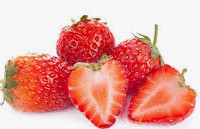
Kinetic Fitting and Quality Change Analysis of Strawberry Infrared Drying

In order to improve the drying efficiency and product quality of strawberry, mid-short wave infrared drying technology was applied to strawberry drying, and the drying characteristics and quality changes were studied under different microwave drying equipment (60, 70, 80 and 90 C) and different drying power (675, 1 125, 1 575 and 2 025 W).
The mid-short wave infrared drying of strawberry belongs to the process of deceleration drying, which has a fast drying speed, and the drying temperature has a significant influence on the drying power. The effective diffusion coefficient of water is 0.607 *10-9~2.126 *10-9 m2/s, and the activation energy E of mid-short wave infrared drying of strawberry is 39.54 kJ/mol. The model fitting shows that the best model for describing the mid-short wave infrared drying of strawberry is Page. Model.