2018年11月1日星期四

Effect of microwave drying on spinach quality

Microwave drying equipment is a kind of electromagnetic wave with frequency of (0.3-300) GHz, which has the characteristics of short oscillation period and strong penetration ability. Water molecule is polar molecule. Under the action of microwave, the water molecule in the material will polarize and arrange orderly along the direction of microwave electric field. Then it will rotate rapidly with the alternating change of high frequency alternating electric field direction, resulting in sharp friction and collision between the water molecule, so that the heat in the material is generated, and the water will leave the material. To dry purposes.
The effects of microwave drying conditions on spinach drying quality were investigated. The results showed that microwave drying of spinach could be divided into three stages: accelerated drying, constant drying and slowed-down drying, and the loss of water mainly occurred in the constant drying speed stage. With the increase of power, paving thickness and wind speed, the retention rate of VC decreases with the increase of paving thickness and increases with the increase of wind speed; the microwave drying power is 1.125 W/g, the paving thickness is 1.5 cm, and the wind speed is 75.
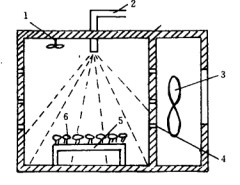
M/min is the best technology for microwave drying of spinach.
The spinach was dried under eight different microwave powers ranging from 90 W to 1000 W, and the drying time was reduced from 4005 s to 290 s. When the microwave power was between 350 W and 1000 W, the energy consumption was approximately the same; when the microwave power was between 750 W, the color and VC retention rate of spinach was the highest, and the energy consumption was relatively small, about 0.12 W.
KW.h.

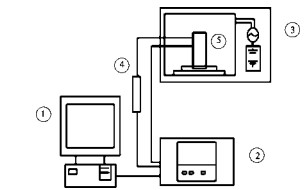
Study on vegetable drying

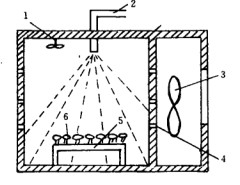
Microwave drying equipment is a common method in modern drying. It uses hot air as drying medium, uses heat sources (coal, petroleum, natural gas, etc.) to provide heat, and blows hot air into oven or drying chamber through blower to speed up air flow and transfer heat to materials.
 Water on the surface of materials is heated and vaporized and diffused into the surrounding air. In gas, when the surface moisture content of the material is lower than its internal moisture content and forms a moisture gradient, the internal moisture diffuses to the surface until the moisture content in the material drops to a certain extent; at the same time, the surface temperature of the material is higher than the material center after heating and forms a temperature gradient, which promotes the heat transfer from the surface to the center. In the drying process, mass transfer and heat transfer occur simultaneously and in opposite directions. 
The hot-air drying of coriander was studied. It was found that the drying time of the blanched coriander was shortened obviously because of the long high-speed drying stage during the whole drying process; the higher the drying temperature, the greater the wind speed, the smaller the thickness of the packing layer, the higher the drying rate and the shorter the drying time; the higher the temperature, the wind speed and the paving time were. The rehydration of coriander dry products increased first and then decreased. 

Research status of drying technology for green leafy vegetables

At present, solar drying, hot air drying, microwave drying equipment, vacuum drying and vacuum freeze-drying are the main drying technologies of green leafy vegetables. The working principle, technical characteristics and application status of these drying technologies in green leafy vegetables processing are introduced.
1.1 solar microwave drying equipment
Solar drying is a low-temperature drying technology, using solar energy as the energy source, the dried materials directly absorb solar energy, or through convective heat transfer with the air heated by the solar collector to obtain heat, the surface of the material after the heat is transferred to the material inside, so that the moisture contained in the material from the material inside the liquid. In the form of state or gaseous diffusion, it gradually reaches the material surface, and then diffuses into the air through the gas film on the material surface, so that the moisture content in the material gradually reduces, and finally realizes the drying of the material.

Research Progress on drying technology of green leafy vegetables

Green leafy vegetables are a kind of common fast-growing vegetables. There are more than 10 families and more than 30 kinds of green leafy vegetables cultivated in China. 
They are rich in various kinds of nutrients. They are rich in vitamins, beta-carotene, minerals and dietary fiber. They can promote gastrointestinal peristalsis, prevent osteoporosis, hypertension, coronary heart disease, diabetes and so on. . 

Chinese nutritionists pointed out that the daily intake of vegetables per person should be (400 ~ 500) g, of which more than 200 g should be green leafy vegetables, green leafy vegetables for human beings is essential.However, green leafy vegetables are not tolerant of storage after harvesting, and the nitrate in green leafy vegetables stored for too long will be converted into nitrite, if not processed in time, not only harmful to human health, but also cause huge economic losses.Abstract: spinach, coriander and celery are rich in green leafy vegetables, and are deeply loved by the masses. Taking the three kinds of green-leaved vegetables as examples, the working principle, technical characteristics, research status and development trend of green-leaved vegetable drying technology were introduced in order to provide reference for the development of green-leaved vegetable drying industry.

2018年10月31日星期三

Microwave drying characteristics and kinetic model of bitter gourd


Abstract: The effects of slice thickness, microwave power and loading on the microwave drying characteristics of bitter gourd were studied by single factor test. The microwave drying kinetics model of bitter gourd was established. 
The results showed that the microwave power had the greatest influence on the drying of bitter gourd, followed by the loading, and finally the slice thickness. The microwave drying of bitter gourd accelerated the drying stage and slowed down the drying stage. The fitting of 7 commonly used thin layer drying dynamics mathematical models is obtained by comparing the correlation coefficient R2, the square of the residue and the RSS and the chi square χ2. The tian model is most suitable for describing the microwave thin layer drying process of bitter gourd slices. Above 0.99.
Key words: thin layer drying; microwave drying; drying characteristics; bitter gourd; kinetic model bitter gourd,
Cucurbitaceae Momordica, in addition to water, protein, fat, carbohydrates, crude fiber and various vitamins, bitter gourd also contains bitter gourd, protein-like active substances and a variety of amino acids and a variety of essential mineral elements, with heat Detoxification, nourishing blood and replenishing qi, replenishing the kidney and protecting the spleen, nourishing the liver and clearing the effect, is a therapeutic treatment for diseases such as fire, fever, dysentery and swollen sores in summer. Fresh bitter gourd has a water content of more than 90%, which is not easy to store at room temperature.

Effect of Drying Methods on Total Organic Acid Content of Total Flavonoids from Fructus Corni

Abstract: The effects of four kinds of microwave drying equipment on total flavonoids, total organic acids, vitamin C and color of hawthorn were studied, and the suitable drying methods of hawthorn were studied. Using hyperoside as standard, the content of total flavonoids in four kinds of drying methods was determined by colorimetric method. The total organic acid content in four kinds of drying methods was determined by acid-base titration with phenolphthalein as indicator. The content of vitamin C in hawthorn was determined by 2,6-dichlorophenol titration method. The color data of four kinds of dry hawthorn powder were determined by colorimeter.
The results showed that the contents of total organic acids, total flavonoids and vitamin C in the four drying methods were significant. The total organic acid and vitamin C content of the freeze-dried samples were the highest, respectively 133. 25 mg / g and 0. 322 4 mg / g; the lowest in natural drying, 94. 55 mg / g and 0. 163 1 mg / g. The content of total flavonoids in microwave drying samples was the highest, and the content of naturally dried samples was the lowest, respectively. 26 mg / g and 32. 25 mg / g. In terms of color, vacuum freeze-dried hawthorn has the best color. Vacuum freeze-drying, on the basis of maximally retaining vitamin C, reduced the loss of total flavonoids to a certain extent and exhibited the most desirable color.

Optimization of apple microwave drying scheme based on electronic nose odor detection

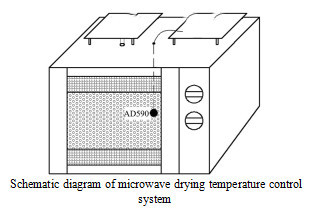
Abstract: In microwave drying, improper setting of process parameters will cause material structure damage and surface burnt, which is often accompanied by the emission of characteristic odor. This article takes apple as the object, adopts 60, 70, 80 °C constant temperature, fuzzy logic control and linear temperature control 5 kinds of drying schemes, through the odor map collected by electronic nose, studies the emission law of characteristic odor, and optimizes the drying scheme. According to the variation rule of apple flavor peak and coke paste peak in the odor map of the constant temperature scheme, the fuzzy logic control scheme determined can realize the on-line adjustment of the magnetron power, preserve the flavor and reduce the burntness. Optimize the measured material temperature curve in the fuzzy logic control scheme, determine the linear temperature control scheme, and eliminate the electronic nose detection link, which is more suitable for industrial applications.
By comparing the product quality of different microwave drying equipment, the quality of the dried product under the linear temperature control scheme is high, time-consuming and strong, and the drying ability is a priority. This study provides a technical basis for the application of odor detection technology to apple drying.
Key words: apple microwave drying; temperature; odor detection; control scheme; apple
Introduction
Apple is widely loved by consumers since the early 1920s.
More than 300 volatile aromatic substances have been isolated from the odor of apples. Only a small part (about 20-40 kinds) of volatile components have been determined to have a decisive influence on sensory quality. In recent years, there has been a lot of research on the smell of apples, but many studies have focused on the classification and storage of apples. Only a part of the research is related to the drying process or parameter control. Three representative volatile components of apple during hot air drying and freeze drying were analyzed by gas chromatography-mass spectrometer (GC-MS).