2018年11月1日星期四

Effect of Different Drying Methods on the Quality of Carrot Powder

Abstract: The carrots were dried and dried by hot air drying, medium and short wave infrared drying, microwave drying equipment and vacuum drying. The quality of the four carrot powders was compared and analyzed. 
The results showed that the a* value and rehydration capacity of carrot powder were characterized by medium-short wave infrared drying>vacuum drying>vacuum microwave drying>hot air drying; there was no significant difference in oil absorption capacity of carrot powder prepared by four drying methods; medium and short wave Infrared dry carrot powder has the highest content of total sugar and β-carotene, and vacuum dried carrot powder has the highest VC content; comprehensively, medium and short wave infrared dried carrot powder has good quality and is suitable for industrial production of carrot powder processing. 
Key words: hot air drying; medium and short wave infrared drying; carrot microwave drying; vacuum drying; carrot powder; quality 
Carrot (Daucus carota L.) is a herbaceous plant of the genus Apocynum, a dicotyledonous plant. 

Research progress on drying technology of green leafy vegetables

Abstract: Spinach, coriander and celery are favored by the masses as nutritious green leafy vegetables. Taking the above three kinds of green leafy vegetables as examples, the working principle, technical characteristics, research status and development trend of green leaf vegetable drying industry were introduced, aiming at providing reference for the development of green leaf vegetable drying industry.

Key words: green leafy vegetables; microwave drying equipment; research status
Green leafy vegetables are a kind of common fast-growing vegetables. There are more than 10 families of green leafy vegetables cultivated in China, more than 30 species, various kinds, rich in nutrients, rich in vitamins, β-carotene, minerals and dietary fiber. It can promote gastrointestinal motility and prevent osteoporosis and diseases such as hypertension, coronary heart disease and diabetes. 
 Chinese nutritionists point out that the daily intake of vegetables per person should be (400~500)g, of which more than 200g should be green leafy vegetables. Green leafy vegetables are essential for humans. However, green leafy vegetables are not resistant to storage after harvesting, and the nitrates in green leafy vegetables that have been stored for a long time are converted into nitrite. 

Development trend of drying technology for green leafy vegetables

Our country is a big green leafy vegetable planting country. Strengthening the research on microwave drying of green leafy vegetable and developing the drying technology with low input and high output can not only greatly increase the added value of green leafy vegetable, enhance the competitiveness of agricultural products, but also promote the development of related industries. Therefore, based on the above research status of green leaf vegetable drying technology, the future development of green leaf vegetable drying technology in China should pay attention to the following aspects:
(1) develop new microwave drying equipment for leafy vegetables. With the energy problem becoming increasingly tense, energy saving and emission reduction has gradually become the trend of China’s food industry. Developing safe and green renewable energy drying equipment can promote the sustainable development of green leaf vegetable drying industry. In addition, the automatic control technology is widely used in the green leaf vegetable dryer. With the help of temperature and humidity sensors, the green leaf vegetable drying process is automatically controlled to realize the drying process automation.
(2) research on new microwave drying equipment. Determine the combined drying sequence and the moisture content of the conversion point, give full play to the advantages of various drying technologies, while ensuring the quality and output of products, shorten the drying time, save energy, reduce costs.

Effect of microwave drying on spinach quality

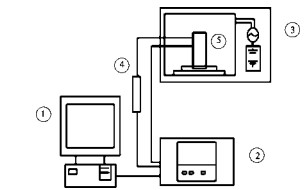
Microwave drying equipment is a kind of electromagnetic wave with frequency of (0.3-300) GHz, which has the characteristics of short oscillation period and strong penetration ability. Water molecule is polar molecule. Under the action of microwave, the water molecule in the material will polarize and arrange orderly along the direction of microwave electric field. Then it will rotate rapidly with the alternating change of high frequency alternating electric field direction, resulting in sharp friction and collision between the water molecule, so that the heat in the material is generated, and the water will leave the material. To dry purposes.
The effects of microwave drying conditions on spinach drying quality were investigated. The results showed that microwave drying of spinach could be divided into three stages: accelerated drying, constant drying and slowed-down drying, and the loss of water mainly occurred in the constant drying speed stage. With the increase of power, paving thickness and wind speed, the retention rate of VC decreases with the increase of paving thickness and increases with the increase of wind speed; the microwave drying power is 1.125 W/g, the paving thickness is 1.5 cm, and the wind speed is 75.
M/min is the best technology for microwave drying of spinach.
The spinach was dried under eight different microwave powers ranging from 90 W to 1000 W, and the drying time was reduced from 4005 s to 290 s. When the microwave power was between 350 W and 1000 W, the energy consumption was approximately the same; when the microwave power was between 750 W, the color and VC retention rate of spinach was the highest, and the energy consumption was relatively small, about 0.12 W.
KW.h.

Study on vegetable drying

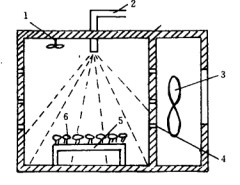
Microwave drying equipment is a common method in modern drying. It uses hot air as drying medium, uses heat sources (coal, petroleum, natural gas, etc.) to provide heat, and blows hot air into oven or drying chamber through blower to speed up air flow and transfer heat to materials.
 Water on the surface of materials is heated and vaporized and diffused into the surrounding air. In gas, when the surface moisture content of the material is lower than its internal moisture content and forms a moisture gradient, the internal moisture diffuses to the surface until the moisture content in the material drops to a certain extent; at the same time, the surface temperature of the material is higher than the material center after heating and forms a temperature gradient, which promotes the heat transfer from the surface to the center. In the drying process, mass transfer and heat transfer occur simultaneously and in opposite directions. 
The hot-air drying of coriander was studied. It was found that the drying time of the blanched coriander was shortened obviously because of the long high-speed drying stage during the whole drying process; the higher the drying temperature, the greater the wind speed, the smaller the thickness of the packing layer, the higher the drying rate and the shorter the drying time; the higher the temperature, the wind speed and the paving time were. The rehydration of coriander dry products increased first and then decreased. 

Research status of drying technology for green leafy vegetables

At present, solar drying, hot air drying, microwave drying equipment, vacuum drying and vacuum freeze-drying are the main drying technologies of green leafy vegetables. The working principle, technical characteristics and application status of these drying technologies in green leafy vegetables processing are introduced.
1.1 solar microwave drying equipment
Solar drying is a low-temperature drying technology, using solar energy as the energy source, the dried materials directly absorb solar energy, or through convective heat transfer with the air heated by the solar collector to obtain heat, the surface of the material after the heat is transferred to the material inside, so that the moisture contained in the material from the material inside the liquid. In the form of state or gaseous diffusion, it gradually reaches the material surface, and then diffuses into the air through the gas film on the material surface, so that the moisture content in the material gradually reduces, and finally realizes the drying of the material.

Research Progress on drying technology of green leafy vegetables

Green leafy vegetables are a kind of common fast-growing vegetables. There are more than 10 families and more than 30 kinds of green leafy vegetables cultivated in China. 
They are rich in various kinds of nutrients. They are rich in vitamins, beta-carotene, minerals and dietary fiber. They can promote gastrointestinal peristalsis, prevent osteoporosis, hypertension, coronary heart disease, diabetes and so on. . 

Chinese nutritionists pointed out that the daily intake of vegetables per person should be (400 ~ 500) g, of which more than 200 g should be green leafy vegetables, green leafy vegetables for human beings is essential.However, green leafy vegetables are not tolerant of storage after harvesting, and the nitrate in green leafy vegetables stored for too long will be converted into nitrite, if not processed in time, not only harmful to human health, but also cause huge economic losses.Abstract: spinach, coriander and celery are rich in green leafy vegetables, and are deeply loved by the masses. Taking the three kinds of green-leaved vegetables as examples, the working principle, technical characteristics, research status and development trend of green-leaved vegetable drying technology were introduced in order to provide reference for the development of green-leaved vegetable drying industry.