2018年11月7日星期三

Preliminary study on combined drying technology of Litchi chinensis

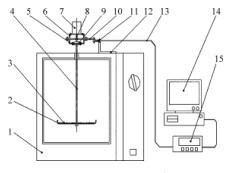
Absrtact: Litchi dried fruit was processed by microwave drying equipment combined with hot air drying technology with fresh fruit litchi as raw material, which solved the problems of short shelf life and easy occurrence of pests of products made by traditional methods.
The results showed that the fresh litchi fruits of “Huaizhi” cultivar were dried to 40% by hot air after color protection treatment.
The quality of dried fruit samples with 60% water content and 800 W microwave average power was the best. With the prolongation of drying processing and storage time, the pulp color of “Huaizhi” litchi was gradually deepened.
Key words: “Huai Zhi” variety litchi; combined drying; microwave drying litchi; browning.
Litchi is native to southern China. Lichee can be grown in tropical and subtropical regions of the world. The litchi planting in China is mainly concentrated in Guangdong, Fujian, Guangxi and Hainan. “Huaizhi” litchi is a popular litchi variety with high yield, sweet and delicious taste, rich in nutrients needed by human body.

2018年11月6日星期二

Drying experiment of potato chips

Materials and instruments
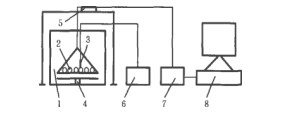
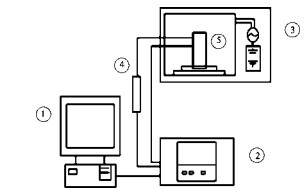
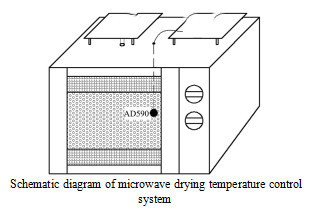
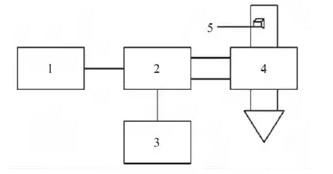
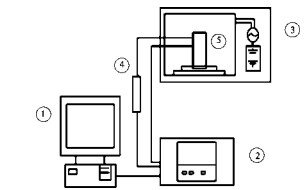
Microwave drying test device: electrothermal blower box, JH423 - 4 electronic balance, 
Method of determination
The initial moisture content is determined by national standards. Before the drying test, the potatoes were cleaned and sliced into thick filter paper to absorb the surface moisture according to the need of the test, and then evenly spread into a layer on the container as required. During the drying process, the material weight was measured regularly until the moisture content of the wet base was safely stored around the water content.
Results and analysis
Effect of slice thickness on drying characteristics of drying characteristics
The drying process can be divided into three stages: accelerated drying stage, constant drying stage and decelerated drying stage. Therefore, under the same drying conditions and a certain time, with the increase of slice thickness, the water content of potatoes increased slightly. It may be due to the increase of the thickness of the slices, the internal water migration to the outer layer needs a process, and the microwave attenuation in the process of penetration.

Study on characteristics and technology of longan drying by microwave

[Absrtact] In order to apply microwave drying technology to longan drying production, the microwave drying experiment of longan was carried out by using self-made microwave drying test system. The effects of microwave drying characteristics and technological conditions on the drying process and quality of longan were tested and analyzed, and the drying process was determined.
Key words: Agricultural Engineering; microwave drying equipment; experiment; longan; drying characteristics; Technology
Longan is a high-quality fruit in subtropical zone. Its cultivation area is expanding rapidly in southern China, and its yield is greatly increased. The drying of longan is of great significance for solving the contradiction between production and marketing and increasing the value of products.

2018年11月5日星期一

Research progress of other rapeseed drying technology

Due to the unique heating characteristics of microwave drying equipment, more and more attention has been paid to the processing of agricultural products and other fields. Microwave drying has the advantages of fast and uniform heating, good selectivity (faster heating in areas with higher moisture content), sensitive reaction, easy control and high energy utilization (mainly absorbed by the dried matter).
Lupinska et al. studied the microwave drying of rapeseed. It was found that microwave drying could sterilize rapeseed and produce less damaged seeds than hot air drying.
The feasibility of microwave drying rapeseed was studied, and the effects of microwave drying on seed value and quality characteristics were analyzed. It was concluded that microwave drying technology was feasible for rapeseed, which could not only dry rapeseed quickly and economically, but also maintain its seed value and improve edible quality, and had favorable variations, but could still be maintained later. Compared with hot air drying and far-infrared drying, microwave drying has the highest precipitation rate in constant-speed drying period, and microwave drying can enhance seed germination potential and improve the nutritional value of rapeseed.

Research status of traditional rapeseed drying technology

Microwave drying is a method that uses microwave as drying medium to heat materials to promote water evaporation and remove water from materials. As a traditional drying method,
has been quite mature. In agricultural production, microwave drying has been widely used in foreign countries, but due to the high energy consumption and high cost of drying process, some domestic grain and oil processing enterprises have used it.
In the drying process of rapeseed, because of the thin cotyledons in the cortex, it is necessary to cool the rapeseed after drying in order to prevent moisture absorption and moisture regain of rapeseed. The hot air drying technology of commonly used rapeseed is: preheating, heating, drying, precipitation, cooling and cooling. In order to ensure drying speed and drying quality, the drying temperature of rapeseed is generally not higher than 75. In addition, rapeseed particles are small, and the pressure drop of hot air passing through rapeseed voids is large, so the drying wind speed should not be too fast, and the wind speed below 2 m/s is more appropriate. In the research of hot air drying technology of rapeseed, there are many and complete studies on the mechanism, technology and quality of hot air drying of rapeseed abroad, but the domestic theoretical research is relatively insufficient.

Research progress of rapeseed drying technology

The drying technology of rapeseed is an important link in the process of rapeseed processing. The different drying methods and processes have a significant impact on the quality of rapeseed. Based on the research results of rapeseed drying mechanism, mathematical simulation, drying technology and quality analysis at home and abroad, the research progress of rapeseed drying technology at home and abroad was reviewed. The methods of hot air drying, warehouse drying, 
 high voltage electric field and superheated steam drying of rapeseed were summarized, and the current situation was pointed out. The problems and shortcomings in the research of rapeseed drying technology were discussed. The development direction of rapeseed drying research was prospected. The aim was to provide reference for the follow-up research of rapeseed drying technology.
Keywords rapeseed, drying, current situation and progress
Rapeseed is the second largest source of vegetable oil in the world, next to soybeans. Its annual output is nearly 60 million tons. Among them, Canada, China, India and Australia are among the top domestic producers. The area and yield of rape in China ranked first in the world in the past 20 years. Rapeseed contains about 38% to 45% fat, 20% to 25% protein and 25% carbohydrates.

Study on microwave drying of potato chips

Absrtact: The orthogonal experiment of microwave drying potato chips was carried out, and the water loss and power consumption characteristics of microwave drying potato chips were obtained. Regression analysis was carried out and the equation of microwave drying potato chips was obtained, which was better fitted by Page equation.
Key words: 
 potato
image
When traditional hot air drying different raw materials, the heating inside and outside of raw materials is uneven, energy consumption is large, time is long, and the drying effect is not ideal. The microwave drying equipment mainly uses the penetration characteristics of microwave. Microwave is a kind of electromagnetic wave, which can produce high frequency electromagnetic field. Polar molecules in dielectric materials change their polar orientation with the frequency of electromagnetic field, which makes molecules vibrate back and forth and generates friction heat. At this time, the field energy of electromagnetic field is transformed into heat energy, which makes the medium temperature rise continuously and has better drying effect. Using microwave technology to dry agricultural products is one of the developing trends in the future.