2019年1月2日星期三

The relationship between microwave technology and wood drying development

Absrtact: Microwave technology, with its unique heating mechanism and characteristics, provides a new way for rapid and efficient wood drying. In this paper, some important advances in wood microwave drying technology at home and abroad in recent years are reviewed, mainly focusing on the optimization of basic drying parameters such as microwave power, moisture content and temperature, and the application of advanced detection technology such as infrared camera technology.
At the same time, the lack of systematic research on the basic theory of wood microwave drying equipment, drying technology, wood structure characteristics and microwave heating inhomogeneity was pointed out. It is suggested that the basic theory research should be strengthened in the future and the modern measurement and control technology should be used in the systematic research.

Effect of microwave drying on quality and volatile substances of wild shepherd's Purse

ABSTRACT: In this paper, the effects of different microwave drying processes on the quality and volatile substances of wild shepherd’s purse were studied.
The volatile substances of wild shepherd’s purse were analyzed by headspace solid phase microextraction (HSSPME) combined with gas chromatography-mass spectrometry (GC-MS) using 120 W, 240 W, 360 W, 480 W, 600 W and 700 W microwave power.
The results showed that microwave drying equipment resulted in a significant decrease in the contents of characteristic alcohols such as folic alcohol, trans-2-hexene-1-alcohol, 2,6-dimethylcyclohexanol and so on. The types and contents of aldehydes decreased slightly, but the contents of isovaleraldehyde, (E) -2-pentenal, n-octanaldehyde and phenylacetaldehyde increased, and the contents of isovalerate nitrite and ethyl 2-methyl-valerate increased. Acidifiers such as 3-methyl butyric acid, 2-methyl butyric acid, hexanoic acid and octanoic acid disappeared, while hydrocarbons such as styrene and cyclotetradecane disappeared.

Effects of drying methods on active ingredients and antioxidant activity of Magnolia fragrans

Absrtact: Magnolia flower was treated by different drying methods, such as sun drying, shade drying, hot air drying and microwave drying equipment, to explore its effects on flavonoids, polyphenols content and antioxidant activity of Magnolia flower.
The results showed that the order of drying speed was microwave drying > hot air drying > sun drying > shade drying. The content and antioxidant activity of flavonoids and polyphenols in the samples dried by shade drying, 900 W microwave drying and 50 C hot air drying were higher, and the degradation loss of polyphenols and flavones was the greatest and the antioxidant activity was the lowest in the sun drying. DPPH clearance was significantly correlated with flavonoid content (R2 = 0.7300) and polyphenol content (R2 = 0.6675), and total reducing power was significantly correlated with polyphenol content (R2 = 0.8234).

Effect of drying methods on lotus seed quality

Absrtact: Five different drying methods of lotus seeds were studied, including microwave drying equipment, vacuum microwave drying, vacuum freeze drying, hot air-vacuum microwave drying and hot air-air extrusion drying, and their effects on the physical properties, main nutrients and microstructure of lotus seeds drying products were studied.
The results showed that the order of total color difference was vacuum freeze drying > Hot air-air extrusion drying > hot air drying > vacuum microwave drying > Hot air-vacuum microwave drying; the order of hardness was hot air drying > vacuum microwave drying > Hot air-vacuum microwave drying > Hot air-air extrusion drying > vacuum freeze drying, and the order of brittleness was vacuum freeze drying < vacuum microwave drying. Drying < hot air drying < hot air-vacuum microwave drying < hot air-air expanding drying < hot air-air expanding drying; the order of specific volume is vacuum freeze drying > Hot air-air expanding drying > Hot air-vacuum microwave drying > vacuum microwave drying > hot air drying.

2019年1月1日星期二

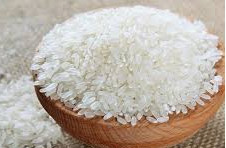
Effects of different drying methods on quality control of reconstituted nutritionally fortified rice

ABSTRACT: On the basis of defining the optimum parameters of five drying processes, i.e. natural air drying, hot air drying, microwave drying equipment, electrothermal vacuum drying and freeze-drying, the effects of different drying processes on the quality of reconstituted nutrient-fortified rice were analyzed.
The results showed that the optimum technological conditions of electrothermal vacuum drying were vacuum 0.025 MPa, drying temperature 35 C and drying time 2.5 h. The cross-sectional compactness, palatability, cold rice texture and sensory evaluation were the best, and the comprehensive cooking quality and texture characteristics were the best.
Among them, heating water absorption rate 280.45%, expansion rate 268.57%, soluble solids weight of rice soup 56.657 mg/g, elasticity of rice grain 0.873 mm, cohesiveness 0.549 gs, recovery value 0.192gs; microwave power 210W, drying time 50 minutes after cooking, the appearance structure of microwave-dried rice grain is the best, hardness 3650.873 G is the smallest; temperature-90 C, drying time 24 hours of freeze-drying technology, the gel adhesion of rice grain 2788.6. 54g, chewing degree 1819.708g was the largest.

Effect of Different Drying Methods on Quality of Toona sinensis Sprouts

Absrtact: The effects of four drying methods on the quality of Toona sinensis sprouts were studied by sensory evaluation and determination of main nutrient contents, including hot drying, microwave drying equipment, vacuum drying and vacuum freeze drying.

The results showed that vacuum freeze-drying could maintain the main nutritional components of Toona sinensis seedlings and sprouts to the greatest extent. After drying, the chlorophyll content in Toona sinensis sprouts reached 14.0081 mg g-1, the vitamin C content reached 2.6203 mg g-1, the amino acid nitrogen content reached 24.3340 mg g-1 and the protein content reached 24.3340 mg g-1. It reached 79.0076 ug, which was higher than other drying methods, and the sensory quality of dried Toona sinensis sprouts was better. The comprehensive effect of vacuum drying was slightly worse than that of vacuum freeze drying. Microwave drying consumed more vitamin C, and the comprehensive effect of microwave drying was worse than that of hot drying.

Optimization of Different Drying Methods for Zishen Capsule Thick Paste

ABSTRACT: OBJECTIVE To optimize the drying process of Zishen capsules and to provide basis for the determination of the production process of Zishen capsules. Methods the effects of hot air drying, vacuum drying, microwave drying and spray drying on the quality of dry extract were studied with the properties of extract, yield, hygroscopicity, pinocoside and paeoniflorin as indicators.
Results: in the dry extract of hot air vacuum drying, microwave drying equipment and spray drying, the contents of spironicin were 0.0140%, 0.0220% and 0.0135% respectively. The paeoniflorin was 0.0475%, 0.0681% and 0.0700% respectively. Conclusion the yield and hygroscopicity of microwave drying dry extract are better than that of spray drying. The amount of index components is higher than that of vacuum drying and spray drying, and the best drying method is determined by microwave drying.